

• Home
  • Offer
  • Flights
  • Santander, Cantabria

Flights to Santander from 170 euros round trip

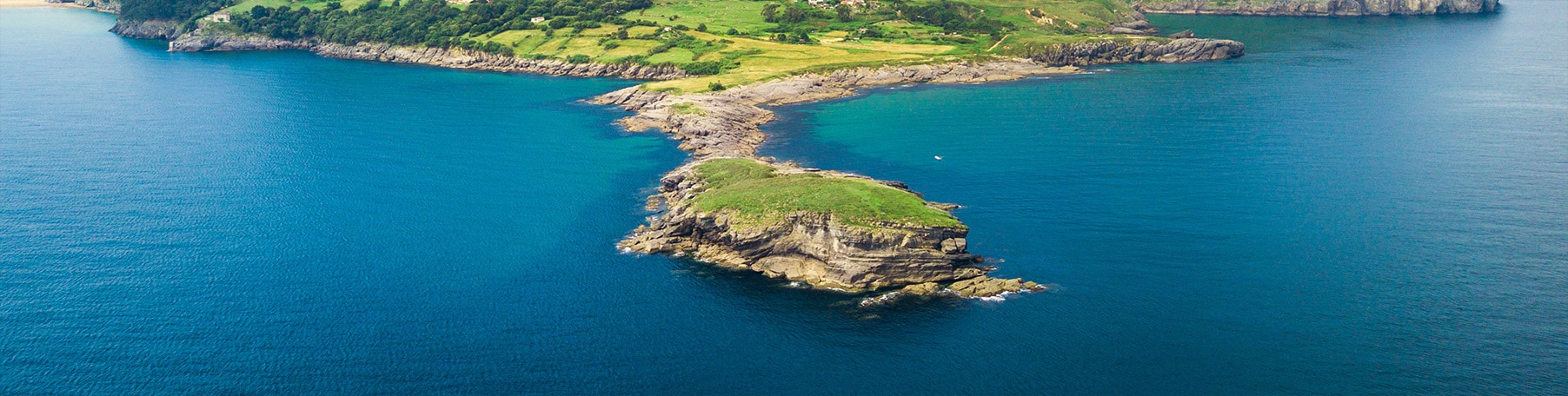
Come to the place where culture and nature go hand in hand. Be amazed by its unique landscapes, such as those of the Costa Quebrada Geopark, a spectacular coastal strip of about 20 kilometers that stretches from the Bay of Santander to Puerto Calderón, in Santillana del Mar. Along this route, you can enjoy a rich cultural journey, from prehistory to the present day, from the subsoil to the sky, encompassing both sea and land. Cantabria is boundless.

Logotipo


Prehistoric
caves


Costa Quebrada surprises visitors with its imposing geology and rich landscapes. A visit here is an enriching experience that allows you to discover the natural beauty of Cantabria and learn about the geological history of this region. It's a symbiosis between its spectacular geological heritage, recognized as a UNESCO Global Geopark, and its coastal traditions. Furthermore, it stands out for the scientific outreach provided by its prehistoric caves filled with cave paintings, such as Altamira and El Pendo.

Visiting Altamira and El Pendo offers an unparalleled immersion into the Paleolithic era, with highlights including the Altamira Neocave (an exact replica of the "Sistine Chapel" of cave art) and the large frieze of red paintings at El Pendo. Both offer insights into the life, art, and tools of our ancestors.


Santander
bay


Looking out over the Bay, one of the most beautiful in the world, in addition to its architectural gems and fantastic promenade lined with museums, you'll find yourself facing the only city in northern Spain that faces south. One of the best places to admire Cantabria in 360 degrees is undoubtedly the Peña Cabarga viewpoint, with its Monument to the Indiano, from which you can almost feel like you're flying.

Furthermore, Santander Bay is a cultural and natural epicenter in northern Spain, distinguished by its membership in the club of the world's most beautiful bays since 1997. It combines historical heritage; contemporary art at the Botín Centre; palatial architecture with the Magdalena Palace; and, of course, a protected natural environment.


Pasiego
valleys


Exploring the Pasiegos Valleys is a truly spectacular experience, where you'll find more cave paintings and Romanesque architecture. You can also enjoy their verdant meadows dotted with cabins, creating one of Spain's most unique landscapes, cultures, and ways of life.

These valleys are home to a unique culture rooted in transhumant shepherding, high-mountain livestock farming, and an austere rural lifestyle that has shaped a landscape of meadows and scattered cabins. Museums like the Ethnographic Museum of Pasiego Life or the Museum of Pasiego Wet Nurses offer a clear perspective on the region's way of life.


Did you know?


Cantabria is a region with a deep and unique cultural identity, standing out as the area with the highest density of cave art in the world and the birthplace of speleology. Its astronomical, maritime, and mountainous landscapes are unparalleled.

Among other things, Cantabria holds the world record for cave art, with more than 6,500 documented caves, 10 of which are UNESCO World Heritage Sites. Furthermore, in 1881, Comillas became the first town in Spain to have electric street lighting.

www.turismodecantabria.com

Loading...